
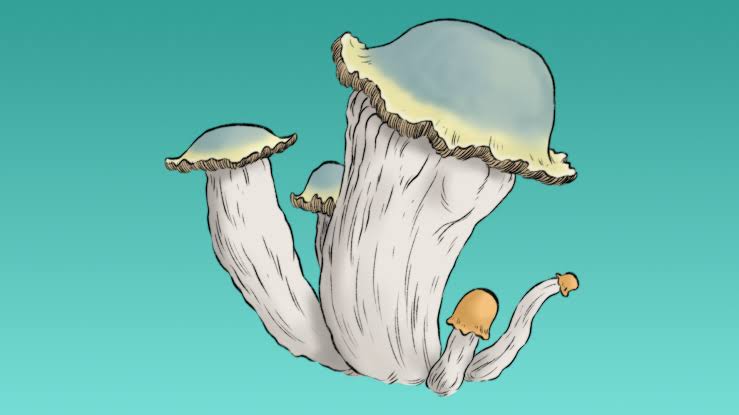
Among the many cultivated varieties of Psilocybe cubensis, Bluey Vuitton has developed a reputation for its distinctive appearance, unusual genetics, and wide range of phenotypic expression. It is a modern hybrid cultivar rather than a naturally occurring species, and its reported lineage traces back to a cross between Panama and Melmac Penis Envy genetics.
But what actually makes Bluey Vuitton different from other Psilocybe cubensis cultivars?
A Modern Hybrid With an Interesting Lineage
Bluey Vuitton is generally reported to have originated from a cross between the Panama cultivar and Melmac Penis Envy, with the hybrid commonly attributed to the mycologist known as Silly Cybin around 2014. Multiple mushroom-focused sources report this same basic lineage, although detailed historical documentation is limited and some of the stories surrounding its origins have become part of mushroom-community lore.
That combination is interesting because Panama and Melmac Penis Envy represent very different branches of cultivated P. cubensis genetics. Bringing them together produced a lineage with a morphology that can look noticeably different from either parent.
It is worth remembering that names such as “strain,” “variety,” “cultivar,” and “isolate” are often used somewhat interchangeably in mushroom communities. In a scientific context, Bluey Vuitton is best understood as a cultivated genetic lineage within the species Psilocybe cubensis.
What Does Bluey Vuitton Look Like?
One of the biggest reasons Bluey Vuitton attracts attention is its appearance.
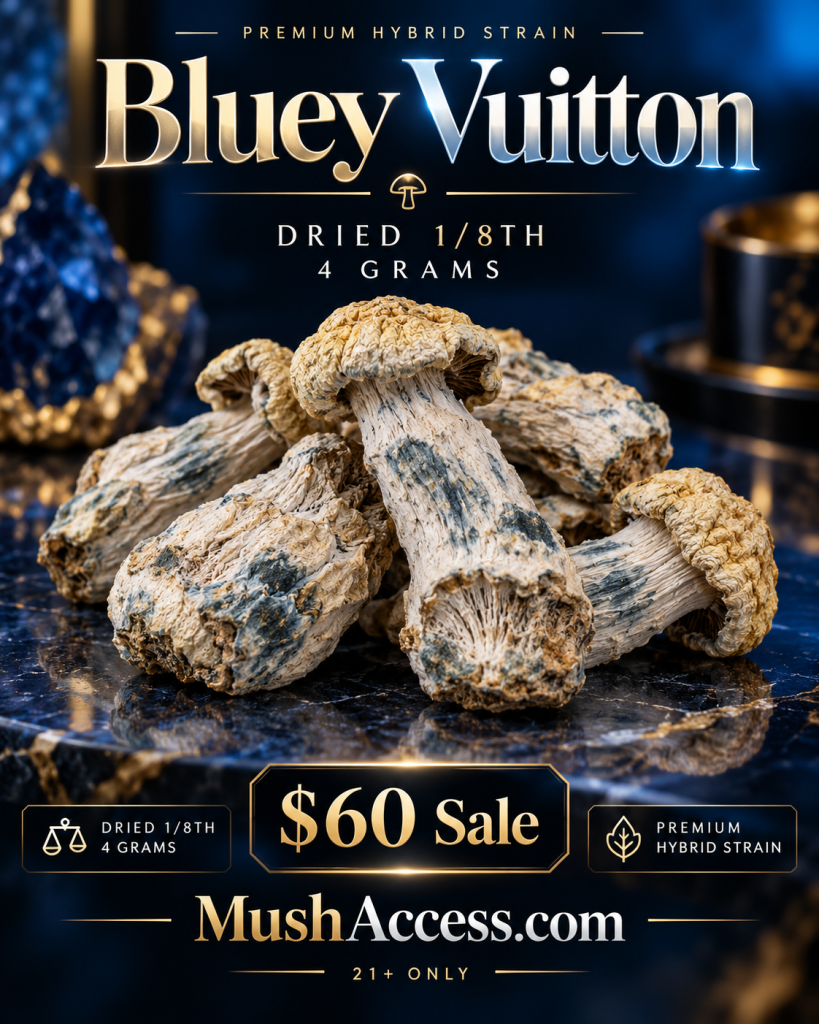
Reported specimens can display relatively light-colored caps with blue or blue-green tones, along with substantial stems and a range of shapes and sizes. Some isolates are described as producing particularly large or dense fruiting bodies, while others can look considerably more conventional.
This variability is important.
There isn’t necessarily one single “correct” Bluey Vuitton appearance. Mushroom genetics are complex, and different isolates can express different characteristics. Community reports have documented everything from relatively ordinary-looking specimens to unusually large or dramatically shaped fruits.
For that reason, identifying a cultivar based solely on appearance isn’t particularly reliable.
Why the Name “Bluey Vuitton”?
The name is a playful reference to the luxury fashion brand Louis Vuitton.
The “Bluey” portion is generally associated with the blue coloration and bruising that can be observed in specimens, while “Vuitton” gives the cultivar its memorable name.
Like many mushroom cultivar names, Bluey Vuitton’s name has become part of its identity within the mycology community. The unusual name also makes it considerably easier to remember than many of the letter-and-number combinations found throughout mushroom genetics.
The Importance of Genetics
One of the most interesting aspects of Bluey Vuitton is the role genetics play in its appearance.
A mushroom cultivar isn’t guaranteed to produce identical-looking fruiting bodies every time. Genetic variation, isolation history, environmental conditions, and the particular genetic material being studied can all influence the final phenotype.
This helps explain why photographs of Bluey Vuitton found online can look surprisingly different from one another.
Some reported isolates produce lighter caps, while others show stronger coloration. Some produce relatively conventional mushroom shapes, while others have much more unusual morphology.
Recent community discussions continue to show this variation, with growers reporting dramatically different Bluey Vuitton phenotypes from different genetic lines.
Bluey Vuitton vs. Albino Bluey Vuitton
Another source of confusion is the relationship between Bluey Vuitton and Albino Bluey Vuitton, often abbreviated ABV.
These names shouldn’t automatically be treated as interchangeable.
Bluey Vuitton generally refers to the original hybrid lineage, while Albino Bluey Vuitton refers to an albino expression that has been separately selected and maintained. Albino and leucistic traits involve differences in pigment expression, and they can produce dramatically different-looking mushrooms.
This is another example of why mushroom genetics can be fascinating: a relatively small genetic difference can result in a very different visual phenotype.
Why Cultivar Names Can Be Complicated
It’s tempting to think of mushroom cultivars as if they were standardized varieties of fruits or vegetables. In reality, the world of P. cubensis genetics is considerably less standardized.
Different suppliers and collectors may use the same name for somewhat different genetic material. Isolates can also develop their own characteristics over generations of selection.
That means the name “Bluey Vuitton” provides useful information about a genetic lineage, but it doesn’t necessarily guarantee that every specimen carrying that name will look identical.
For anyone interested in mycology, this is actually part of what makes cultivated mushroom genetics so interesting.
A Cultivar Worth Studying
Bluey Vuitton stands out because it combines an interesting reported lineage with a distinctive and variable appearance.
Its commonly reported Panama × Melmac Penis Envy background, unusual coloration, and broad range of phenotypes have made it a recognizable name within the modern P. cubensis community.
Perhaps the most interesting lesson from Bluey Vuitton isn’t simply what the mushroom looks like. It’s how much genetics can influence the appearance of a single species.
For mushroom enthusiasts and mycology researchers, cultivars like Bluey Vuitton provide an opportunity to observe how different genetic lineages can produce dramatically different physical characteristics within Psilocybe cubensis.
At MushAccess, we’re fascinated by the genetics, biology, and diversity of fungi—and Bluey Vuitton is a great example of just how much variation can exist within a single species.
Commonly reported effects include:
- Changes in visual perception—colors, patterns, textures, and movement may seem more pronounced.
- Altered sense of time, with minutes sometimes feeling much longer or shorter.
- Increased introspection and unusual or highly associative thoughts.
- Changes in mood, ranging from euphoria and laughter to emotional sensitivity.
- A stronger sense of connection to music, nature, or surroundings.
- Physical sensations such as relaxation, heaviness, tingling, nausea, or changes in body awareness.
- At stronger experiences, confusion, anxiety, paranoia, or difficulty distinguishing thoughts from external reality can occur.
Best selling products
-
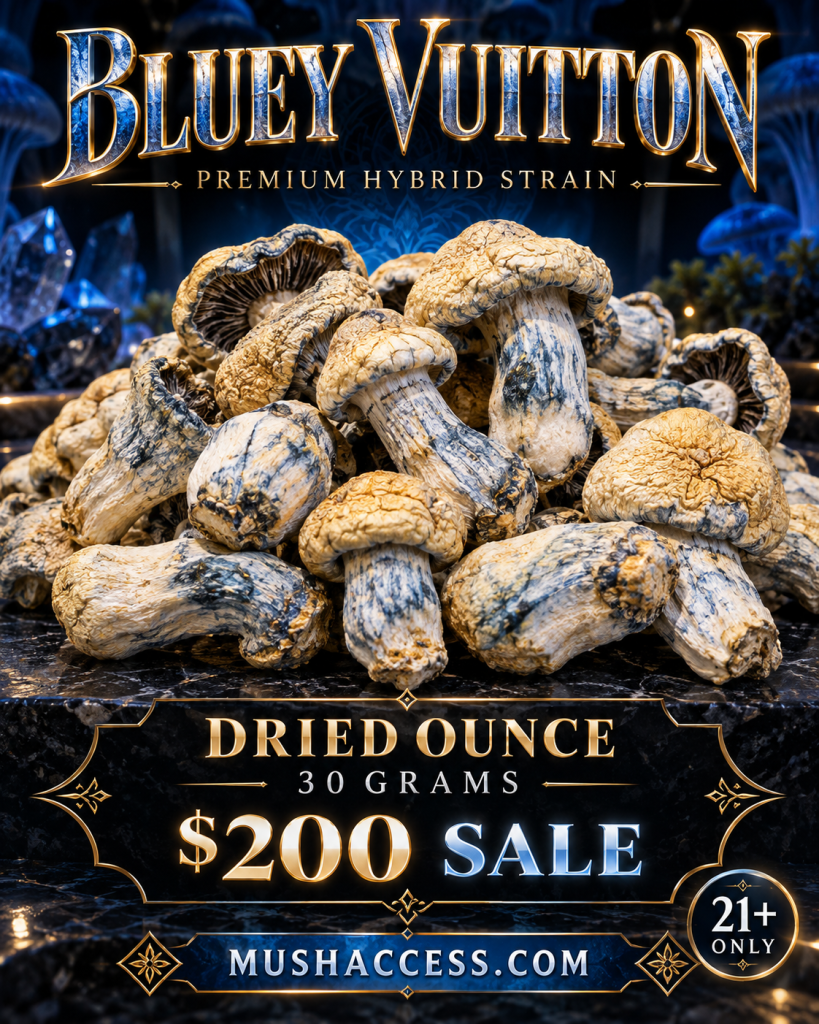
Dried Bluey Vuitton Ounce (30 Grams)
Original price was: $250.00.$200.00Current price is: $200.00. -
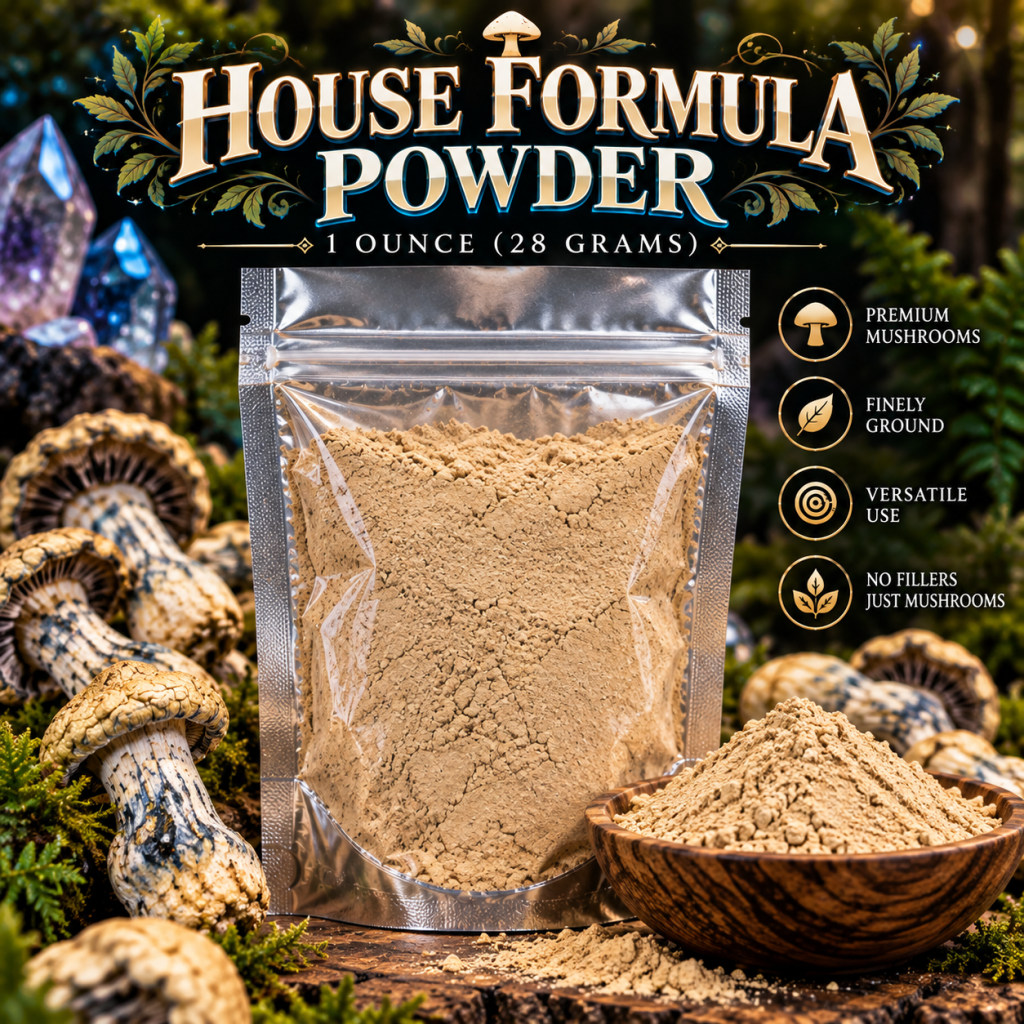
House Formula Powder (1 Ounce)
Original price was: $150.00.$100.00Current price is: $100.00. -
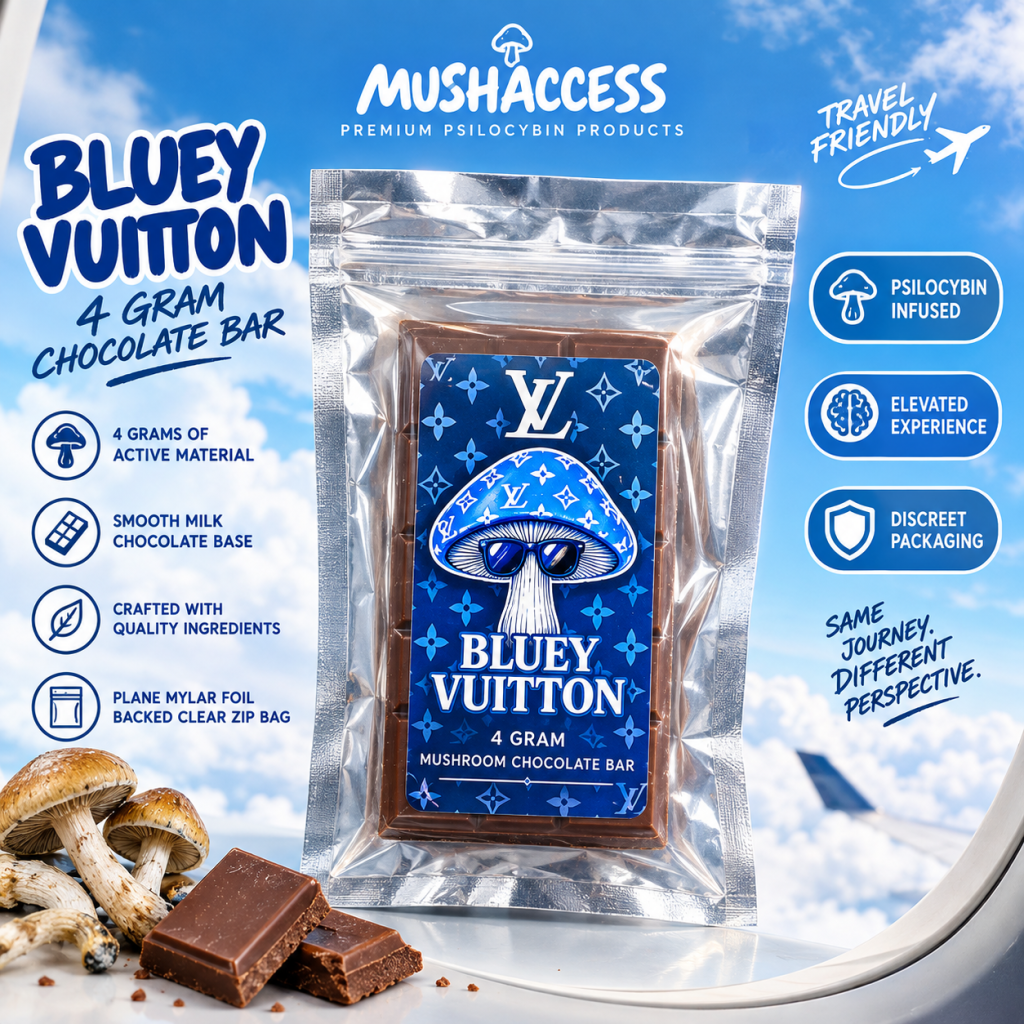
Bluey Vuitton (4 Gram) MushAccess Chocolate Bar
Original price was: $80.00.$50.00Current price is: $50.00. -
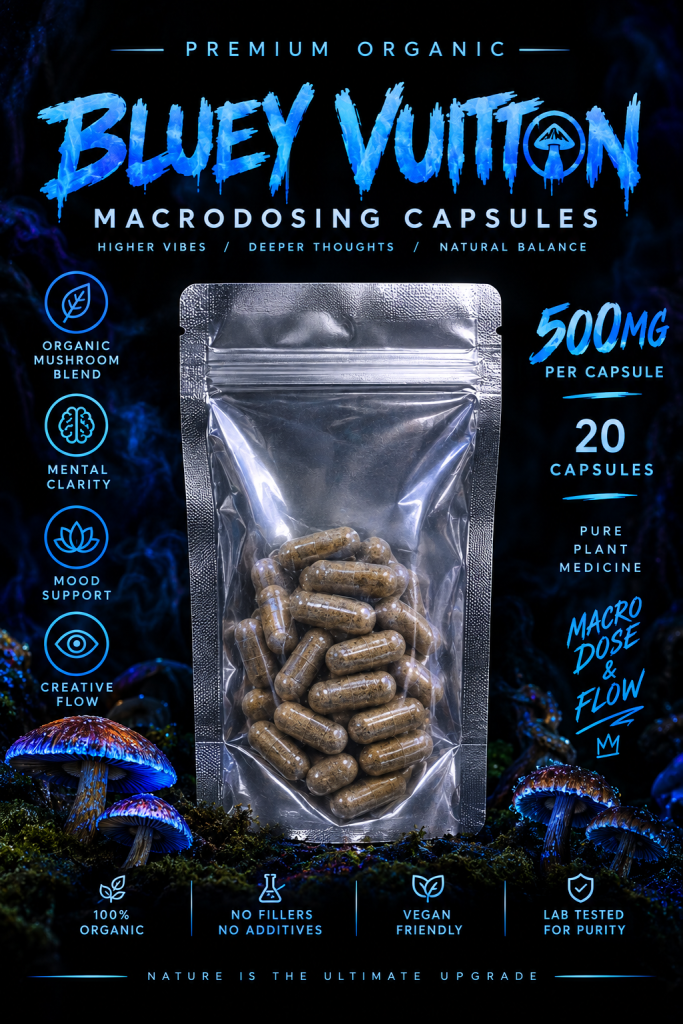
Bluey Vuitton 500mg Organic Macrodosing Capsules (20 Caps)
Original price was: $120.00.$90.00Current price is: $90.00. -
Dried Bluey Vuitton 1/8th (4 Grams)
Original price was: $80.00.$60.00Current price is: $60.00.
Educational note: This article discusses mushroom taxonomy, genetics, and morphology for educational purposes. Psilocybin-containing mushrooms are regulated differently depending on jurisdiction. Always understand and follow the laws that apply where you live.

Leave a Reply