Shipping to all 50 U.S. states | Age Verified via AgeChecker.net | No Minors

Category: Uncategorized

  • Beyond Ordinary | Magic Mushroom Gummies

    Beyond Ordinary | Magic Mushroom Gummies

    Not all mushroom gummies are made the same.

    Mushroom gummies have become increasingly popular, but take a closer look at the market and you’ll notice something: many products look almost identical to ordinary candy.

    Bright colors, clear gelatin, fruit flavors, and smooth textures are common. Some contain mushroom extracts, while others use powdered mushrooms or a combination of ingredients.

    At MushAccess, we’ve taken a different approach.

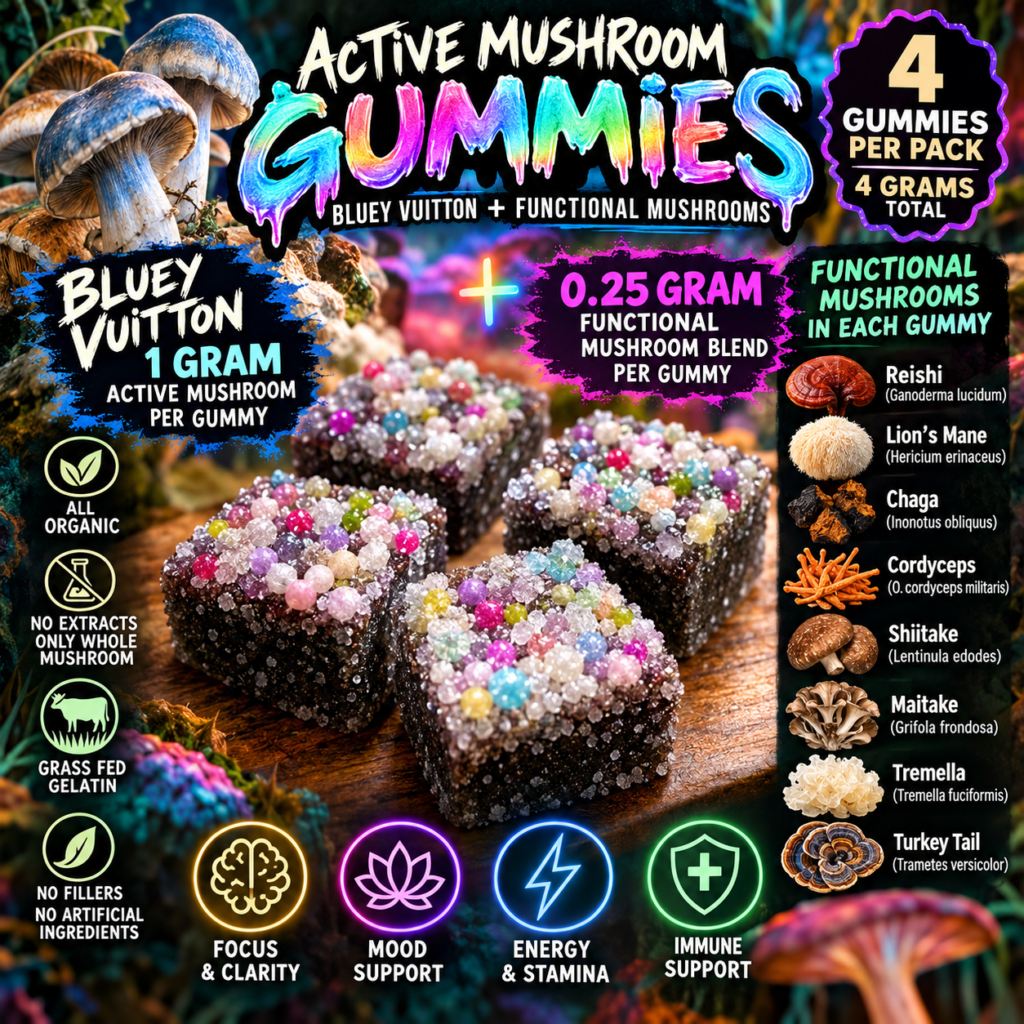
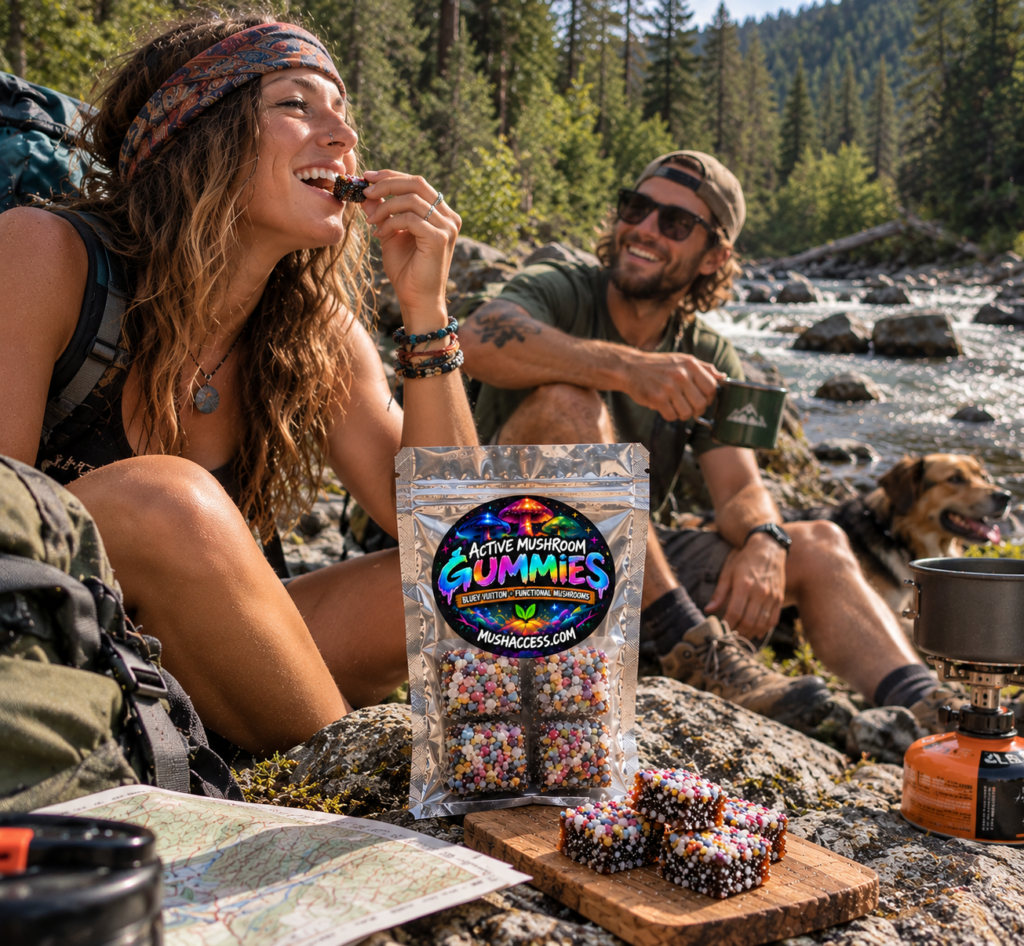
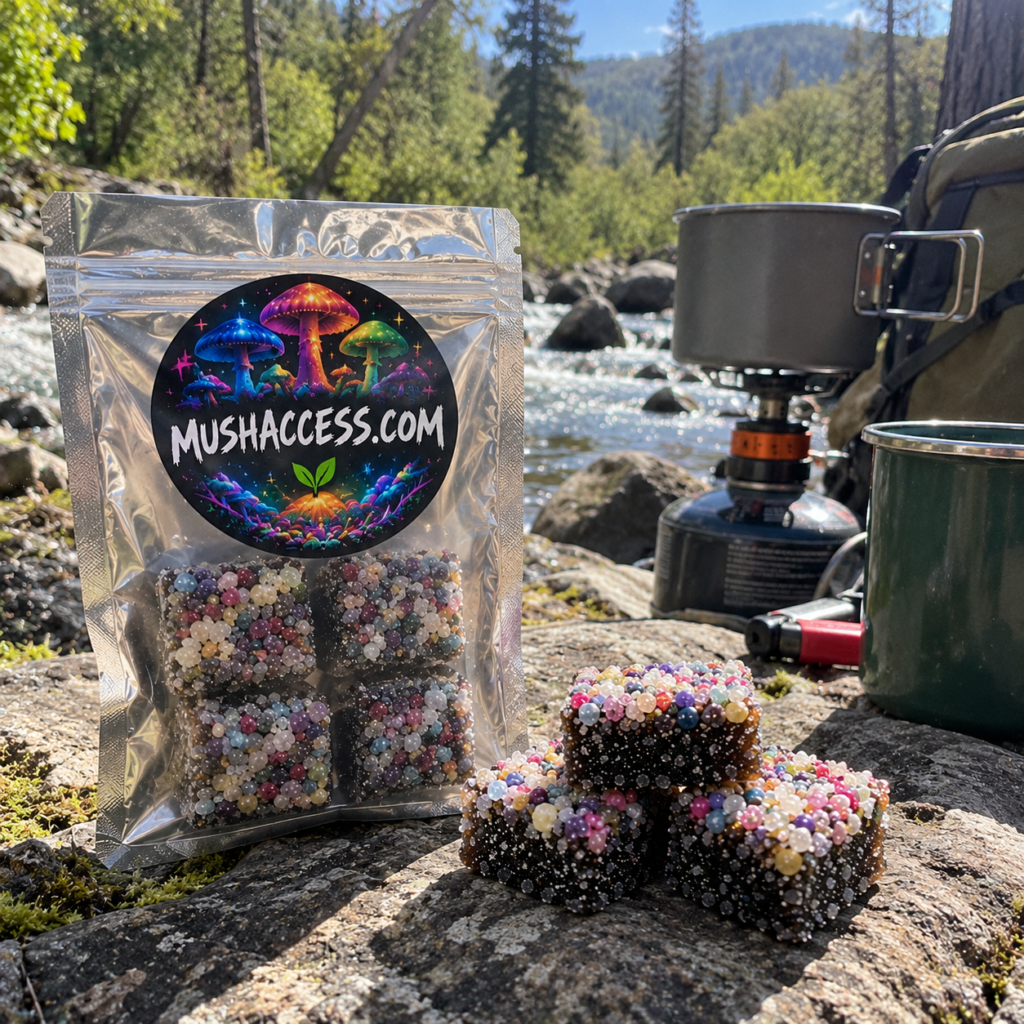
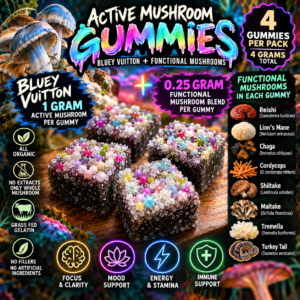
    Our latest creation brings together whole mushroom ingredients, eight functional mushroom varieties, and grass-fed gelatin in a uniquely dark, colorful, handcrafted gummy.

    And there’s a reason they look different.

    Why Our Mushroom Gummies Don’t Look Like Regular Candy

    One of the first things you’ll notice about our gummies is their dark color and dense appearance.

    That’s intentional.

    Instead of relying on mushroom extracts, our recipe incorporates finely ground whole mushroom powder directly into the gummy mixture.

    The mushroom material contributes to the gummies’ dark appearance and texture, while a colorful crystalline coating creates a contrast with the naturally darker base.

    We aren’t trying to make our gummies look like ordinary fruit candy.

    We wanted to make something that reflects the ingredients inside.

    Whole Mushroom Powder vs. Mushroom Extracts

    There’s an important difference between whole mushroom powder and mushroom extracts.

    Whole mushroom powder is made by drying and grinding mushroom material. It retains a broader range of the original mushroom’s components, including fiber and naturally occurring compounds.

    Mushroom extracts are produced through processes designed to separate or concentrate particular constituents.

    Both approaches have their place, but they’re not interchangeable.

    For our formulation, we chose whole mushroom powder because we wanted the mushroom material itself to remain part of the finished product.

    No mushroom extracts. No mushroom powder fillers.

    Just a straightforward approach built around whole mushroom ingredients.

    Eight Functional Mushrooms in One Blend

    Functional mushrooms have been used in culinary and traditional wellness practices for generations.

    Our eight-mushroom blend includes:

    • Lion’s Mane: Popular in cognitive wellness formulations and studied for its unique naturally occurring compounds.
    • Reishi: Traditionally associated with relaxation and general wellness.
    • Chaga: Known for its dark appearance and naturally occurring polyphenols.
    • Cordyceps: Often included in mushroom blends focused on energy and physical performance.
    • Shiitake: A culinary favorite containing naturally occurring beta-glucans.
    • Maitake: Also called Hen of the Woods and valued for its polysaccharides.
    • Tremella: Recognized for its gelatinous texture and distinctive polysaccharides.
    • Turkey Tail: Known for its colorful, layered appearance and naturally occurring polysaccharides.

    Together, these eight varieties bring different mushroom traditions and natural compounds into one formulation.

    Purchase or new gummies below:
    Bluey Vuitton Mushroom Gummies – 4-Pack | 4 Grams Active + 8 Functional Mushrooms

    Original price was: $80.00.Current price is: $75.00.

    Not all mushroom gummies are created equal.

    Walk through the gummy market today, and you’ll find plenty of products that look and taste just like ordinary candy. Bright colors, clear gelatin, artificial flavorings, concentrated extracts, and long ingredient lists can make it difficult to know exactly what you’re getting.

    At MushAccess, we wanted to take a different approach.

    Our Bluey Vuitton Mushroom Gummies are made with actual whole mushroom powder—not mushroom extracts or synthetic substitutes.

    And you can see the difference.

    Category: ,
  • Microdosing FAQ: 25 Questions Beginners Ask

    Microdosing FAQ: 25 Questions Beginners Ask

    Microdosing has become one of the most searched and discussed topics in modern mushroom culture. But for someone new to the subject, there can be a lot of questions.

    What is microdosing? What are people trying to get from it? How does mushroom microdosing differ from a full psychedelic experience? What does the research actually say?

    This microdosing FAQ answers 25 common beginner questions and provides a starting point for learning more about psilocybin mushrooms and microdosing.


    1. What Is Microdosing?

    Microdosing generally refers to taking a very small amount of a psychedelic substance, intended to remain below the level that produces a noticeable psychedelic experience.

    People who explore microdosing often incorporate it into their normal routines rather than seeking an intense psychedelic experience.

    2. What Is Mushroom Microdosing?

    Mushroom microdosing generally refers to consuming a small amount of a mushroom containing psychedelic compounds such as psilocybin.

    The term is commonly associated with psilocybin-containing mushrooms.

    3. What Is Psilocybin?

    Psilocybin is a naturally occurring psychedelic compound found in certain species of mushrooms.

    The body converts psilocybin into psilocin, which interacts with serotonin receptors in the brain and contributes to psychedelic effects.

    4. What Is the Difference Between Microdosing and a Full Dose?

    The primary difference is the amount consumed and the intended experience.

    A full psychedelic dose is intended to produce noticeable changes in perception and consciousness. Microdosing is intended to be much subtler and generally below the threshold of noticeable psychedelic effects.

    5. Why Do People Microdose?

    People explore microdosing for many different personal reasons.

    Commonly discussed interests include:

    • Creativity
    • Focus
    • Mindfulness
    • Personal reflection
    • Curiosity
    • Productivity
    • Exploring different perspectives

    Personal experiences vary considerably.

    (more…)
  • The Default Mode Network & Psychedelic Research

    The Default Mode Network & Psychedelic Research

    If you’ve spent any time reading about psychedelic research, you’ve probably come across the term Default Mode Network, or DMN.

    It sounds complicated, but the basic idea is surprisingly easy to understand.

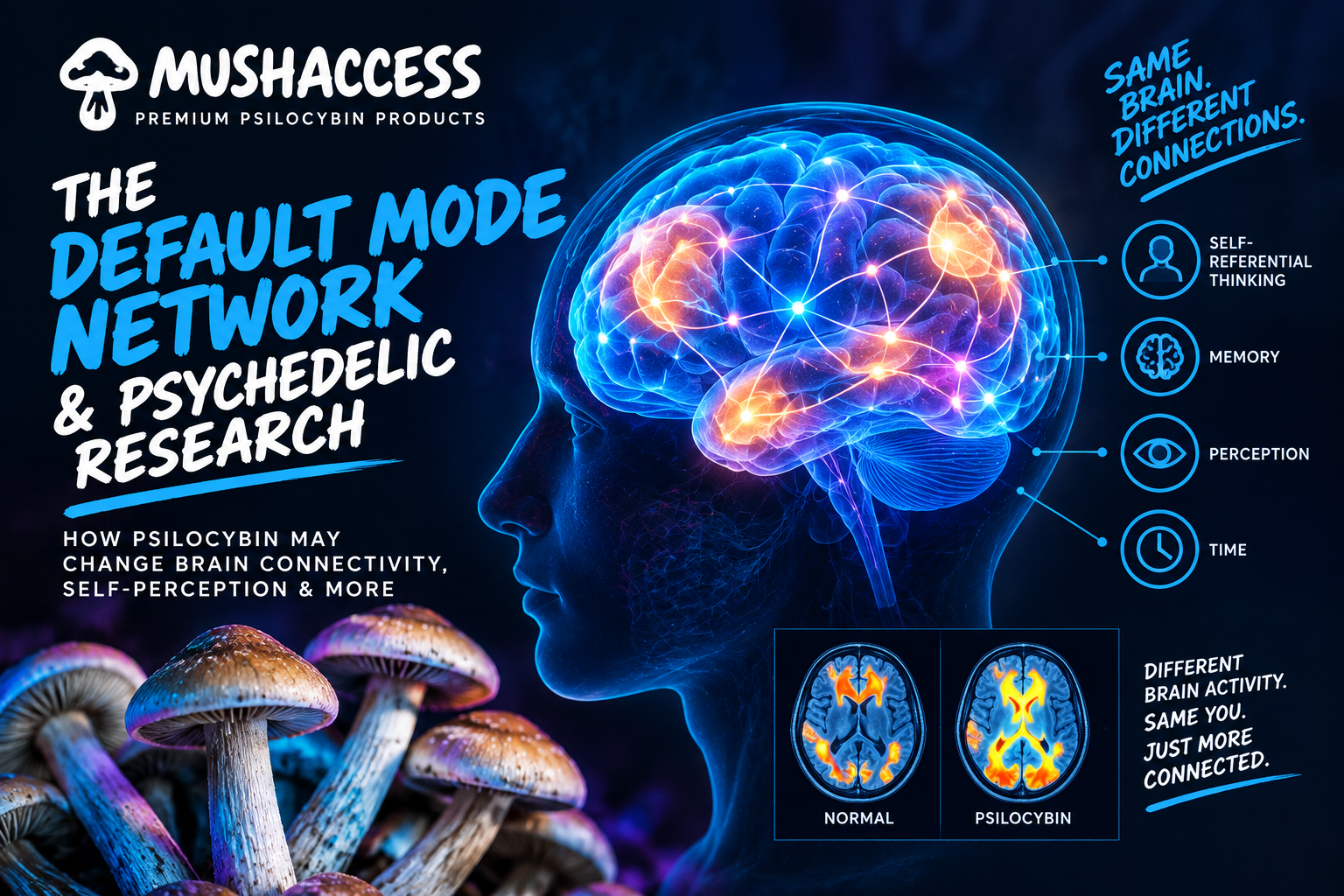
    The DMN is a collection of interconnected brain regions involved in processes such as self-referential thinking, autobiographical memory, daydreaming, internal narratives, and thinking about the past and future.

    Researchers have become particularly interested in the DMN because psychedelic experiences can involve noticeable changes in how people experience themselves, their thoughts, their surroundings, and their sense of time.

    So what exactly is the DMN, and what does psychedelic research tell us about it?


    What Is the Default Mode Network?

    The Default Mode Network is a group of brain regions that tend to communicate with one another during certain types of internally focused mental activity.

    Rather than being a single part of the brain, the DMN is better understood as a network.

    Research has associated the network with several processes, including:

    • Self-referential thinking
    • Autobiographical memory
    • Daydreaming
    • Internal narrative
    • Thinking about the past
    • Imagining the future

    In other words, the DMN is closely connected with the ongoing stream of thoughts that can make up our ordinary inner experience.

    You aren’t necessarily aware of the network itself.

    You’re aware of the thoughts, memories, plans, and mental narratives that emerge while your brain is operating.


    Why Does the DMN Matter in Psychedelic Research?

    One reason researchers are interested in the DMN is that psychedelic experiences can involve changes in the way people experience their sense of self.

    Under ordinary circumstances, the brain maintains relatively familiar patterns of communication between different networks.

    Psychedelic research has found that these patterns can change following psilocybin administration.

    Brain-imaging studies have reported changes in DMN activity and functional connectivity.

    Functional connectivity refers to how activity in different brain regions changes in relation to one another.

    This doesn’t mean that the DMN simply switches off.

    The reality is more complicated.

    Researchers have observed changes in how brain networks communicate and organize their activity..

    (more…)
  • Microdosing Mushroom Strains, Varieties & Active Compounds

    Microdosing Mushroom Strains, Varieties & Active Compounds

    If you’re new to psychedelic mushrooms, the names can get confusing pretty quickly.

    Bluey Vuitton. Penis Envy. Melmac. Panama. Golden Teacher. B+.

    Then there are terms like psilocybin, psilocin, tryptamines, potency, genetics, and alkaloids.

    So what does it all actually mean?

    This guide breaks down the basics of mushroom varieties and, more importantly, explains what the active compounds do in the body and brain.


    Species vs. Variety

    Let’s start with the basics.

    Species is the biological classification of the mushroom.

    Variety or genetic line describes a particular set of genetics within that species.

    For example, Psilocybe cubensis is a species that includes many varieties commonly discussed in the mushroom community.

    You may come across names such as:

    • Panama
    • Golden Teacher
    • B+
    • Penis Envy
    • Melmac
    • Bluey Vuitton

    These names don’t necessarily mean you’re dealing with completely different species. In many cases, they describe different genetic lines of the same species.

    Genetics can influence appearance, growth characteristics, size, shape, and the concentration and balance of naturally occurring compounds.


    What Makes a Mushroom “Active”?

    When people talk about active mushrooms, they’re generally referring to mushrooms containing psychedelic compounds such as psilocybin and psilocin.

    Psilocybin is the best-known compound, but it’s important to understand what happens after it enters the body.

    Psilocybin is converted into psilocin, its primary psychoactive metabolite. Psilocin can cross the blood-brain barrier and interact with several serotonin receptors.

    This is where the experience begins.


    Psilocybin → Psilocin

    Think of psilocybin as the starting point.

    After ingestion, the body rapidly converts psilocybin into psilocin through a process called dephosphorylation. Psilocin is the compound that produces most of the psychedelic effects in the central nervous system.

    A simplified way to look at it is:

    Mushroom → Psilocybin → Psilocin → Serotonin receptors → Changes in brain signaling

    Psilocin has a chemical structure similar to serotonin, which allows it to interact with serotonin receptors in the brain.


    The 5-HT2A Receptor

    The most important receptor to understand when discussing psilocybin is 5-HT2A.

    Psilocin acts as a partial agonist at this receptor, and evidence indicates that 5-HT2A activation is central to the psychedelic effects of psilocybin. Studies using 5-HT2A-blocking drugs have shown substantial reductions in the subjective psychedelic effects.

    5-HT2A receptors are particularly common in areas of the cerebral cortex involved in:

    • Perception
    • Attention
    • Cognition
    • Emotion
    • Self-referential thinking

    When psilocin interacts with these receptors, normal patterns of brain signaling can change.

    That can contribute to changes in perception, thought patterns, sensory processing, emotions, and the sense of self.

    (more…)
  • A Beginner’s Guide to Microdosing Dried Mushrooms

    A Beginner’s Guide to Microdosing Dried Mushrooms

    What the term means, what people report feeling, and why dried weight is only part of the picture

    Microdosing means taking a small amount of psilocybin mushrooms with the intention of having a subtle experience rather than a full psychedelic one. Some people describe feeling more present, curious, or appreciative of music and nature. Others notice little difference. Those are personal reports, and research has not consistently confirmed the benefits people attribute to microdosing.

    Dried mushroom amounts you may see described as microdoses

    Dried mushroom weightHow it appears in research
    Below 0.1 gIncluded in some studies of microdosing
    0.1–0.3 gA commonly reported range
    0.3–0.5 gAlso called a microdose in some studies, though effects may be more noticeable

    This chart describes reported amounts; it is not a starting-dose recommendation. “Microdose” has no universally agreed gram range. Mushroom potency varies, so two samples of the same weight may feel different. In one blinded study, 0.5 g of dried mushrooms produced noticeable effects for some participants.

    (more…)
  • What Does a Mushroom Microdose Feel Like Compared With a Macrodose?

    What Does a Mushroom Microdose Feel Like Compared With a Macrodose?

    Understanding the gentle everyday experience and the more immersive psychedelic one

    People describe psilocybin mushrooms in very different ways. Some talk about feeling a little more present on a walk or more engaged with music. Others describe vivid emotions, altered perception, and a day that feels entirely unlike their usual routine. Often, they are describing two different experiences: a microdose and a macrodose.

    Part of the experienceMicrodoseMacrodose
    Overall feelingA subtle shift within an ordinary dayA distinct, immersive psychedelic experience
    MoodSome people report feeling brighter, more open, or more emotionally awareEmotions may feel much more intense
    Music and surroundingsFamiliar things may feel a little more engagingMusic, colors, and patterns may feel strikingly different
    ThoughtsSome report fresh perspective while still feeling like themselvesThoughts may feel unusually meaningful or move in unexpected directions
    TimeUsually feels familiarMay seem to slow down or change
    Daily routineIntended to leave everyday functioning largely intactOften makes the experience itself the focus of the day

    These are descriptions of what people may feel, not guaranteed effects. Research finds that subjective effects generally grow more pronounced at higher psilocybin doses, while mindset and surroundings also shape the experience.

    (more…)
  • Can You Learn From a Bad Trip? A Thoughtful Look at Difficult Psilocybin Experiences

    Can You Learn From a Bad Trip? A Thoughtful Look at Difficult Psilocybin Experiences

    A psilocybin experience does not have to feel easy to leave someone with something worth reflecting on. Fear, sadness, or confusion may draw attention to feelings they have been avoiding or needs they have overlooked.

    People often call these moments “bad trips.” The fear is real. With time and support, some people also find meaning in what happened.

    Set and setting matter

    Set is the mindset someone brings into an experience: their mood, expectations, and what is happening in their life. Setting is the space and the people around them. Both can shape how an experience feels. That is one reason psilocybin research places such emphasis on preparation and support.

    Small comforts can matter when sensations and emotions feel heightened:

    • Music: Choose something familiar and calming, with an easy way to lower the volume or turn it off.
    • A trusted trip buddy: A calm, sober person can offer reassurance and help keep the space safe without trying to direct the experience.
    • Comfortable clothing: Soft layers make it easier to adjust if the room feels too warm or too cool.
    • Hair out of the face: A hair tie or clip can remove one small, persistent irritation.
    • An uncluttered space: Comfortable seating, water nearby, and fewer interruptions can make it easier to settle.

    These details do not guarantee an easy experience. They can make the surroundings feel more manageable.

    (more…)
  • Can Microdosing Help Spark Original Ideas? New Research Offers an Encouraging Clue

    Can Microdosing Help Spark Original Ideas? New Research Offers an Encouraging Clue

    MushAccess.com | Mushroom Research

    Creativity often begins with a new perspective: a surprising idea, an unexpected connection, or a different way to approach something familiar. That’s one reason so many people are interested in microdosing psilocybin.

    Researchers are beginning to study that connection more closely. In a study published in Neuropharmacology, researchers combined results from three double-blind, placebo-controlled trials involving 171 participants. They found that people who received psilocybin microdoses produced a higher proportion of original ideas on a divergent-thinking task than people who received a placebo.

    What is divergent thinking?

    Divergent thinking means exploring several possible answers to a question instead of stopping at the first one. It’s the kind of thinking we use when brainstorming, making art, writing music, or finding a fresh approach to a problem.

    That makes the study’s focus especially compelling. Researchers looked at the originality of participants’ responses, giving us a more specific way to explore a question people have asked for years: Could microdosing help support more flexible, creative thinking?

    (more…)
  • Psilocybin Research Offers Hope—and Inspires New Interest in Microdosing | Major Depressive Disorder

    Psilocybin Research Offers Hope—and Inspires New Interest in Microdosing | Major Depressive Disorder

    The psychedelic escape from depression


    Psilocybin Research Offers Hope—and Inspires New Interest in Microdosing

    What a Johns Hopkins depression study found, and why people are curious about smaller doses

    Interest in psilocybin is growing for a reason: people want new ways to support their mental well-being. Some are drawn to the possibility of guided psychedelic therapy. Others are curious about microdosing, taking amounts intended to be small enough to avoid a full psychedelic experience.

    A Johns Hopkins study offers an encouraging look at psilocybin-assisted therapy. Researchers followed adults with major depressive disorder after two supported psilocybin sessions. At the 12-month follow-up, 75% met the study’s criteria for a treatment response, and 58% met its criteria for remission. For many participants in this small study, improvement lasted well beyond the treatment sessions.

    Why does this matter to people interested in microdosing?

    The study reflects a broader shift: researchers are taking psilocybin seriously and asking how it might fit into mental health care. That attention has helped open more thoughtful conversations about mushrooms, well-being, and the different ways people hope to use them.

    People interested in microdosing often talk about wanting to feel more present, creative, or connected in everyday life. Those personal experiences are part of why the topic resonates with so many people. Curiosity and careful research can go hand in hand.

    The distinction is that this Johns Hopkins study did not test microdosing. Participants received two psilocybin doses in a research setting, with preparation and support from trained facilitators. Its results are promising for the treatment studied, but they cannot tell us whether microdosing improves depression or produces the same lasting benefits.

    (more…)
  • Mushrooms are Getting More Attention.

    Mushrooms are Getting More Attention.

    Microdosing has brought a new kind of curiosity to the conversation about psilocybin mushrooms. Instead of seeking a full psychedelic experience, people who microdose are interested in whether a much smaller amount might make a difference in everyday life.

    Ask people why they’re interested, and the answers are personal. Some say they hope to feel more creative or open to new ideas. Others talk about wanting to be more present, reflect on their habits, or approach a difficult day with a fresh perspective. For some, the appeal is simply the chance to explore mushrooms in a way they expect to feel subtle.

    These stories are part of why microdosing has gained attention. They are also personal experiences, not a promise that someone else will feel the same way.

    What is microdosing?

    Microdosing generally means taking a small amount of a psychedelic without seeking the pronounced effects of a full dose. There is no universally agreed standard for what counts as a microdose, and people’s experiences can differ.

    That distinction matters to people who are curious about mushrooms but are less interested in an intense experience. They may be asking a quieter question: Could something subtle change how I experience an ordinary day?

    What do people say about it?

    People who speak positively about microdosing often describe changes that are hard to capture in a single measurement. They might say they felt more engaged with a creative project, more aware of their thoughts, or more inclined to pause and reflect. Others describe an interest in personal growth or spiritual exploration.

    People’s reasons for using psilocybin are varied. In a U.S. survey, respondents reported motivations that included enjoyment, curiosity, personal development, spiritual growth, cognitive enhancement, and hopes of improving mental health. Those answers tell us what people were seeking; they do not establish that psilocybin delivered those outcomes.

    We think those personal accounts are worth listening to. They help explain why the subject resonates with so many people and give researchers better questions to investigate.

    How common has microdosing become?

    More common than many people might expect. A RAND survey found that psilocybin was the most commonly used psychedelic among the U.S. adults surveyed for past-year use. Among those who reported using psilocybin in the past year, 47% said they had microdosed the last time they used it.

    That finding was part of the trend covered in NPR’s article on mushrooms and microdosing. It shows that microdosing is a substantial part of today’s interest in psilocybin, rather than a fringe topic.

    What is science learning?

    Researchers are taking people’s interest seriously. Studies are examining the experiences people report and asking whether microdosing produces measurable effects on mood, thinking, and well-being.

    There are encouraging personal reports and some studies that suggest possible benefits. At the same time, a review of mushroom microdosing research found that much of the evidence relies on self-reports, while the clinical trials it examined did not find significant improvements. Researchers still need stronger studies to understand which effects, if any, are caused by microdosing and who might experience them.

    That uncertainty does not make people’s experiences meaningless. It means we should describe them honestly: people report positive experiences, and science is still working to understand them.

    A thoughtful approach to the conversation

    At MushAccess.com, we welcome curiosity about mushrooms and the people who share their experiences with them. Microdosing has inspired conversations about creativity, intention, mental health, and the ways people make room for reflection in their lives. We believe those conversations are more useful when they leave space for both enthusiasm and honest questions.

    Microdosing can also have unwanted effects, including anxiety, sleep problems, and physical discomfort. Psilocybin may pose particular risks for people with certain mental health conditions. If you have a health condition or take medication, speak with a qualified healthcare professional about your personal risks.

    Why are people talking about microdosing? Because many are curious about the possibility of a subtle, meaningful experience. Their stories have opened an interesting conversation, and research is helping us understand it more clearly.

    This article is for education only and is not medical advice.