
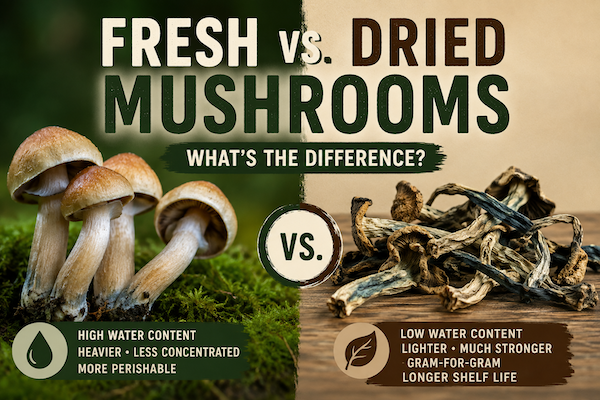
Fresh and dried mushrooms may come from the exact same fruiting body, but once the water is removed, they become very different in terms of weight, texture, storage, and concentration.
Fresh mushrooms are soft, flexible, and heavy with moisture. Dried mushrooms are lightweight, brittle, and much stronger gram-for-gram because most of their water has been removed.
Understanding this difference is especially important when discussing active mushrooms.
The Biggest Difference: Water
Fresh mushrooms contain a large amount of water.
A significant portion of a fresh mushroom’s weight comes from moisture rather than actual fungal material. When that mushroom is dried, most of the water is removed, leaving behind the concentrated mushroom material.
This is why a large fresh mushroom can become surprisingly small after drying.
The mushroom hasn’t necessarily lost most of its solid material—it has lost most of its water weight.
Why Dried Mushrooms Are Much Stronger Gram-for-Gram
One of the biggest differences between fresh and dried mushrooms is strength by weight.
Fresh mushrooms contain a large amount of water. When that water is removed during drying, the remaining mushroom material becomes much more concentrated.
As a result, dried mushrooms are much stronger gram-for-gram than fresh mushrooms.
A gram of fresh mushroom contains a significant amount of water, while a gram of properly dried mushroom consists primarily of concentrated fungal material. The naturally occurring compounds in the mushroom are therefore concentrated into a much smaller overall weight.
It’s important to understand that drying doesn’t create additional psilocybin or other active compounds. Instead, it removes water, meaning there is far more mushroom material per gram of dried product.
This is why comparing equal weights of fresh and dried mushrooms can be misleading. One gram of fresh mushroom and one gram of dried mushroom do not represent the same amount of actual fungal material.
The exact concentration can still vary substantially between individual mushrooms and genetic lines. Drying makes the material more concentrated by weight, but it doesn’t make every mushroom chemically identical.
A Simple Example
Imagine a fresh mushroom weighing 10 grams.
Most of that weight may be water. After the mushroom is dried, it could weigh only a fraction of its original weight.
The mushroom now looks smaller and weighs much less, but the remaining material is substantially more concentrated.
This illustrates why one gram of dried mushroom can represent far more actual mushroom material than one gram of fresh mushroom.
The same basic principle applies to dried fruit, herbs, and other foods: removing water reduces weight while concentrating the remaining solid material.
What Happens During Drying?
Drying is essentially a preservation process.
Removing moisture makes it much harder for microorganisms to grow and slows many of the processes responsible for decomposition.
As mushrooms lose water, their texture changes from soft and flexible to dry and brittle.
Their appearance can change dramatically as well.
Caps may shrink and become wrinkled, stems become thinner and harder, and colors can become darker or more muted.
These changes are normal consequences of removing water from fungal tissue.
Does Drying Create More Active Compounds?
No.
Drying doesn’t magically produce additional psilocybin or other naturally occurring compounds.
Instead, it removes water from the mushroom, leaving the existing fungal material concentrated into a much smaller weight.
However, the drying process itself can influence chemical stability. Heat, oxygen, light, moisture, and storage time can contribute to chemical changes.
So while dried mushrooms are much stronger gram-for-gram, drying shouldn’t be thought of as creating additional active compounds.
Why Fresh Mushrooms Are So Heavy
A fresh mushroom can contain a surprisingly large amount of water.
That water contributes to the mushroom’s weight but isn’t part of the dry fungal material.
This is why a handful of fresh mushrooms can weigh considerably more than the same mushrooms after drying.
Once the water is gone, the remaining material is much lighter.
Fresh Mushrooms Are More Perishable
Fresh mushrooms contain enough moisture to support microbial activity and natural decomposition.
As a result, they generally have a much shorter shelf life than properly dried mushrooms.
Fresh mushrooms can also bruise, become slimy, discolor, or develop mold if they aren’t handled and stored appropriately.
Dried mushrooms are considerably easier to preserve because removing moisture creates an environment that is much less favorable to microbial growth.
However, “dried” doesn’t mean immune to deterioration.
Dried mushrooms can still absorb moisture from humid air, and exposure to moisture can reduce their shelf stability.
Dried Mushrooms Are Much Lighter
One of the easiest ways to understand the difference between fresh and dried mushrooms is to look at their weight.
Most of the weight lost during drying is water.
This means a mushroom can lose a large percentage of its original weight without losing the same percentage of its solid fungal material.
The result is a product that is:
- Much lighter
- Much smaller
- Much more concentrated by weight
- Easier to store
- Less susceptible to moisture-related spoilage
Does Fresh vs. Dried Change the Experience?
For active mushroom species, comparing fresh and dried material based solely on weight can create a misleading picture.
Because fresh mushrooms contain substantial amounts of water, equal weights of fresh and dried material do not represent equal amounts of fungal material.
This is why dried mushrooms are much stronger gram-for-gram.
At the same time, the actual concentration of active compounds can vary from mushroom to mushroom because of genetics, individual fruiting bodies, maturity, growing conditions, and processing.
The cultivar name alone isn’t a guarantee of a particular concentration.
Different Mushrooms Can Have Different Water Content
Mushrooms don’t all contain exactly the same amount of water.
Water content can vary depending on:
- Species
- Genetics
- Age
- Growing conditions
- Harvest timing
- Environmental humidity
- Individual fruiting body
Because of this, there isn’t one universal fresh-to-dry conversion that applies perfectly to every mushroom.
Two mushrooms with the same fresh weight can lose different amounts of water during drying.
Why Drying Doesn’t Guarantee Identical Potency
It’s important not to confuse concentration with standardization.
Drying makes the material much more concentrated by weight, but it doesn’t make every mushroom chemically identical.
Two dried mushrooms from the same cultivar can still contain different concentrations of naturally occurring compounds.
Genetics and individual biological variation remain important.
This is one reason laboratory analysis is necessary when precise chemical concentrations are important.
Why Storage Matters
Once mushrooms have been dried, protecting them from moisture becomes especially important.
Dried material can absorb water from the surrounding environment, particularly in humid conditions.
Heat, light, oxygen, and moisture can also contribute to chemical changes over time.
Good storage practices are therefore an important part of preserving dried mushroom material.
Fresh vs. Dried: A Simple Comparison
| Feature | Fresh Mushrooms | Dried Mushrooms |
|---|---|---|
| Water content | High | Very low |
| Weight | Much heavier | Much lighter |
| Texture | Soft and fleshy | Dry and brittle |
| Strength gram-for-gram | Lower | Much higher |
| Shelf stability | Lower | Higher |
| Appearance | Larger and fuller | Smaller and shriveled |
| Main storage concern | Spoilage and excess moisture | Humidity, heat, light, and oxygen |
The Bottom Line
The biggest difference between fresh and dried mushrooms is water.
Fresh mushrooms contain a large amount of water, making them heavier and less concentrated by weight. Drying removes that water and leaves behind a much more concentrated amount of fungal material.
That’s why dried mushrooms are much stronger gram-for-gram than fresh mushrooms.
Drying doesn’t create additional psilocybin or magically increase the total amount of active compounds. Instead, it removes water and concentrates the compounds already present into a much smaller amount of material.
At the same time, genetics, individual mushrooms, maturity, growing conditions, drying methods, and storage can all influence the final chemical profile.
Understanding the difference between fresh and dried mushrooms is another example of just how interesting fungal biology can be.
Educational note: This article discusses the biology and chemistry of mushrooms, including species that may contain psychoactive compounds. Laws governing psilocybin-containing mushrooms vary by jurisdiction. Never consume a wild mushroom unless its identity has been positively established by a qualified expert.

Leave a Reply