
What if some of the things you’ve spent years trying to understand about yourself aren’t actually who you are?
What if the anxiety, the defensiveness, the inability to trust, the constant need to control everything, the feeling that something is wrong with you—all of it makes more sense when you understand what happened to you?
And what if there were a way to temporarily step outside those deeply ingrained patterns and look at your life from a completely different perspective?
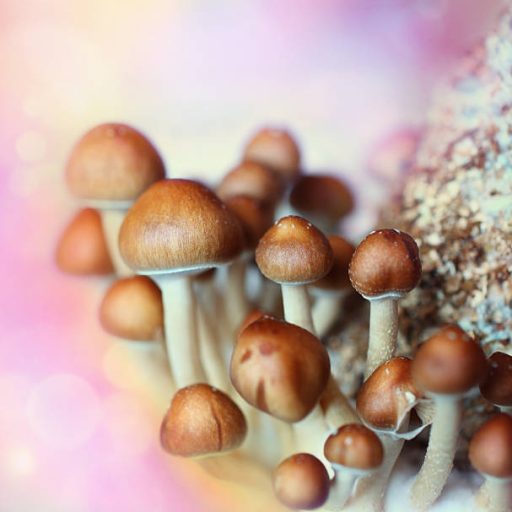
This is one of the reasons scientists are taking psilocybin, the psychedelic compound found in magic mushrooms, so seriously.
For decades, psychedelics were pushed to the margins of medicine. Today, that is changing rapidly. The FDA issued its final guidance for psychedelic-drug clinical trials in July 2026 and is actively supporting research into psychedelic treatments for serious mental-health conditions.
The question is no longer simply, “Are psychedelics dangerous drugs?”
Researchers are asking a much more interesting question:
Could psychedelics help the brain become unstuck?
You Are Not Your Trauma
One of the most powerful ideas emerging from psychedelic therapy is that a person can begin to separate what happened to them from who they believe they are.
Childhood trauma can leave behind conclusions that feel like facts.
“I’m not good enough.”
“People always leave.”
“I can’t trust anyone.”
“I have to take care of everybody.”
“If I let my guard down, I’ll get hurt.”
“My feelings don’t matter.”
“Something is wrong with me.”
But those beliefs didn’t necessarily originate with you.
They may have been survival strategies.
A child living in an unpredictable environment learns to watch for danger. A child who isn’t consistently loved may learn to become exceptionally pleasing. A child who is repeatedly criticized may become terrified of making mistakes.
Those responses can be incredibly intelligent adaptations when you’re a child trying to survive your environment.
The problem is that the brain doesn’t always know when the emergency is over.
You grow up.
The environment changes.
But the pattern remains.
And suddenly you’re forty years old, reacting to a situation in the present with the nervous system you developed twenty or thirty years ago.
That’s where the idea of a psychedelic “reset” becomes so interesting.
What If the Pattern Could Loosen?
Psilocybin doesn’t erase memories.
It doesn’t magically delete trauma.
But researchers have found that psychedelics can dramatically alter patterns of brain activity and connectivity associated with perception, self-referential thinking, emotion, and cognition.
One possible consequence is psychological flexibility.
Instead of automatically following the same mental path, you may temporarily experience the possibility of another path.
Imagine spending your entire life looking at yourself through a distorted mirror.
You don’t realize the mirror is distorted.
You simply assume:
“That’s what I look like.”
Then, for a brief period, something changes.
You see yourself differently.
You might suddenly recognize:
“I wasn’t a bad child.”
“I was scared.”
“I wasn’t unlovable.”
“I was neglected.”
“I wasn’t weak.”
“I was surviving.”
That shift in perspective can be extraordinarily powerful.
The Brain May Become More Open to Change
One of the most exciting areas of psychedelic research involves neuroplasticity—the brain’s ability to change and form new connections.
Researchers are investigating whether psychedelics can temporarily create a period of increased flexibility in which established patterns become less rigid and new learning becomes easier.
That could help explain why psychedelic experiences can sometimes feel like stepping outside yourself.
The usual voice in your head becomes quieter.
The story you’ve been telling yourself for years may suddenly seem less absolute.
You can observe your thoughts instead of automatically believing them.
And for someone carrying decades of trauma, that can create something incredibly valuable:
space.
Space between the memory and the reaction.
Space between the thought and the belief.
Space between “this happened to me” and “this is who I am.”
PTSD Is One of the Most Interesting Areas of Research
The PTSD research is still early, but some of the findings are difficult to ignore.
A 2026 pilot study examined psilocybin-assisted therapy in 12 military veterans with severe, treatment-resistant PTSD. Participants received extensive therapy along with two supervised psilocybin sessions.
One month after treatment, 9 of the 12 participants no longer met diagnostic criteria for PTSD.
That’s a remarkable result.
But it needs to be interpreted correctly: this was a very small, open-label pilot study without a control group, so it cannot prove that psilocybin caused the improvement. Larger controlled trials are needed.
Still, imagine what a result like that means for someone who has already tried years of conventional approaches and still feels trapped inside their trauma.
It gives researchers a reason to keep looking.
And it gives patients something that many people with treatment-resistant conditions desperately need:
hope.
What About the Trauma You Don’t Talk About?
Not all trauma looks like PTSD.
Sometimes it’s the childhood you barely remember.
Sometimes it’s a parent who was physically present but emotionally absent.
Sometimes it’s years of walking on eggshells.
Sometimes it’s being bullied.
Sometimes it’s abandonment.
Sometimes it’s growing up around addiction, violence, instability, or constant conflict.
And sometimes you can’t point to one catastrophic event.
You simply know that something inside you has never felt right.
This is one reason psychedelic experiences are so intriguing.
People sometimes report gaining a different relationship with memories, emotions, relationships, and their sense of self.
They may experience grief they didn’t realize they were carrying.
They may feel compassion for themselves for the first time.
They may recognize that behaviors they’ve spent years judging themselves for were actually attempts to protect themselves.
And sometimes they come away with a very simple realization:
“I don’t have to keep living the way I learned to survive.”
The Goal Isn’t to Forget
This is an important distinction.
Healing doesn’t necessarily mean forgetting what happened.
You don’t need to erase your childhood.
You don’t need to pretend it didn’t hurt.
You don’t even need to forgive the people who hurt you.
The goal can be much simpler:
The past stops controlling the present.
The memory can remain.
But perhaps the panic isn’t as overwhelming.
Perhaps the shame isn’t as powerful.
Perhaps you can think about the person who hurt you without feeling like you’re five years old again.
Perhaps you can finally understand:
“That was then. I’m here now.”
For someone with trauma, that realization can represent an enormous psychological shift.
Why the Experience Alone Isn’t Enough
There is an important caveat—and ironically, it makes the therapeutic potential of psychedelics even more interesting.
The strongest clinical models aren’t simply about taking a mushroom and hoping for a miracle.
They involve preparation, a carefully supported psychedelic experience, and integration afterward.
The psychedelic experience may open the door.
Therapy and reflection help determine what you do after walking through it.
Think of it like turning over soil.
The psychedelic may loosen the ground.
But you still have to plant something new.
You have to build healthier relationships.
You have to learn boundaries.
You have to challenge old beliefs.
You have to process grief.
You have to practice responding differently.
You have to learn that safety doesn’t require constant vigilance.
That’s where the lasting transformation may come from.
The Most Powerful Possibility: Seeing Yourself Differently
Maybe the biggest promise of psilocybin isn’t that it makes people feel good.
It may be that, under the right circumstances, it can help people see themselves differently.
Imagine looking back at your younger self and feeling compassion instead of shame.
Imagine realizing that the person you have spent years calling “broken” was actually doing the best they could with the tools they had.
Imagine realizing that the hypervigilance, perfectionism, people-pleasing, anger, avoidance, or emotional shutdown that once protected you doesn’t have to run your life forever.
That is a much more interesting idea than simply getting high.
It’s the possibility of changing your relationship with yourself.
Why People Are Paying Attention Now
This isn’t just a fringe conversation anymore.
The FDA has now issued formal guidance specifically addressing psychedelic clinical research, including considerations around safety, study design, dosing, monitoring, and psychotherapy.
Federal agencies are openly supporting development of psychedelic medicines for serious mental-health conditions.
And researchers are conducting increasingly sophisticated studies into PTSD, depression, addiction, and other conditions.
The field still has unanswered questions.
But something important has changed:
Scientists are no longer dismissing the possibility that psychedelics could become legitimate tools for mental-health treatment.
They’re investigating how to make them safer, more predictable, and more effective.
So, Should You Try Magic Mushrooms?
That question deserves a thoughtful answer rather than a sales pitch.
If you’re interested because you’ve spent years struggling with trauma, PTSD, depression, anxiety, or deeply ingrained patterns, the research gives you a legitimate reason to be curious.
But curiosity should lead to education and professional guidance—not reckless experimentation.
Psilocybin can produce extremely intense psychological experiences, and it isn’t appropriate for everyone. Clinical psychedelic therapy involves screening, preparation, supervision, and follow-up for a reason.
The most compelling version of the psychedelic story isn’t:
“Take mushrooms and everything will be fixed.”
It’s:
“What if your brain is more capable of change than you were told—and what if, under carefully supported circumstances, psilocybin could help you access that change?”
That’s the possibility researchers are trying to understand.
And for someone who has spent years feeling trapped by the past, even the possibility of finally becoming unstuck can be powerful.
Maybe the goal isn’t to erase your story.
Maybe it’s to realize that your story isn’t finished.
You are not the worst thing that happened to you.
You are not the fear you learned as a child.
You are not the survival strategy you developed when you had no other choice.
And perhaps one of the most hopeful things psychedelic research is teaching us is this:
The mind can change.
Sometimes, changing the way we see the past can be the beginning of changing the way we live the future.
This article is for education and discussion, not medical advice. Psilocybin remains investigational for PTSD and childhood trauma in the United States. The strongest emerging evidence involves structured, supervised psychedelic-assisted therapy rather than unsupervised use of mushrooms.

Leave a Reply